
Table of Contents
When is the best time to pour concrete in East Tennessee?
In our experience, spring and fall generally provide the most favorable conditions for concrete installation, while many mild winter days can also offer excellent pouring conditions when proper cold-weather procedures are followed. Surprisingly, summer can be the most challenging season because high temperatures, concrete temperature, direct sunlight, humidity, wind and rapid moisture loss can affect placement, finishing and curing.
After more than 20 years of pouring concrete throughout Knoxville and East Tennessee, Crescostone has learned that choosing the right conditions involves much more than simply checking the temperature or whether rain is in the forecast.
Most homeowners assume the answer is summer.
It isn’t.
After more than 20 years of installing concrete throughout Knoxville and East Tennessee, we’ve learned that some of the conditions people associate with a “perfect concrete day” can actually make placing, finishing and curing concrete more difficult.
In East Tennessee, spring and fall generally offer some of the best conditions for pouring concrete. Mild winter days can also provide excellent conditions when proper cold-weather procedures are followed. Summer, despite being our busiest season, can actually be the most challenging.
That’s because successful concrete installation depends on much more than whether it is raining.
Air temperature, concrete temperature, humidity, wind, direct sunlight, ground conditions and the weather expected during the critical early curing period can all affect a concrete placement.
An experienced concrete contractor doesn’t simply look at the forecast and ask, “Is it going to rain?”
We look at the entire environment in which that concrete will be placed and cured.
What Is the Best Time to Pour Concrete in East Tennessee?
Generally, our preferred seasonal order is:
- Spring and fall — typically the most favorable overall conditions
- Winter — often very good when temperatures remain suitable and proper cold-weather protection is used
- Summer — completely workable, but frequently the most demanding because of heat, concrete temperature, solar exposure and rapid moisture loss
That surprises a lot of people.
Summer is also when we receive many requests for driveways, patios, sidewalks, pool decks and other outdoor concrete projects. People naturally associate warm, sunny weather with construction.
But concrete doesn’t necessarily share our enthusiasm for a blazing-hot Tennessee summer day.
Why Spring and Fall Are Often Ideal for Concrete
Moderate temperatures are one reason spring and fall can provide excellent conditions for concrete placement in East Tennessee.
Concrete doesn’t simply “dry.” It hardens through a chemical process called hydration, and maintaining appropriate temperature and moisture conditions during that process is important.
When conditions are moderate, contractors generally have more control over placement, finishing and early curing.
However, the season alone never guarantees good conditions.
A warm, dry and windy spring afternoon can create rapid surface evaporation. A fall day can begin cool and become considerably warmer by afternoon. Large temperature swings also have to be considered.
That’s why we evaluate the actual conditions on the day of the pour rather than scheduling concrete according to the calendar alone.
Can You Pour Concrete in Winter in Tennessee?

Yes. Concrete can absolutely be poured during winter in East Tennessee.
The American Concrete Institute explains that concrete placed during cold weather can develop the required strength and durability when it is properly produced, placed and protected.
This is one of the biggest misconceptions we hear from homeowners.
East Tennessee frequently experiences periods of relatively mild winter weather. When temperatures and the forecast are appropriate, those cooler conditions can actually be very favorable for concrete placement.
Cooler weather generally slows the process compared with extreme summer heat, giving the crew more working time and reducing the rapid surface moisture loss that can become a problem during hot-weather placement.
The important distinction is between cool weather and freezing conditions.
Concrete must be protected from freezing during its vulnerable early curing period. When cold-weather conditions require it, additional measures may include:
- adjusting the concrete mixture for expected conditions
- coordinating the mix with the concrete supplier
- monitoring concrete and air temperatures
- protecting the subgrade from frozen conditions
- using insulating concrete blankets
- extending protection and curing time
- scheduling the pour around approaching freezing weather
We don’t look at the calendar and automatically stop pouring concrete because it says December or January.
We look at the conditions.
A mild East Tennessee winter day may provide a much better concrete-placement window than a 95-degree summer afternoon.
Why Summer Can Be the Hardest Time to Pour Concrete
Here’s the part that surprises most customers:
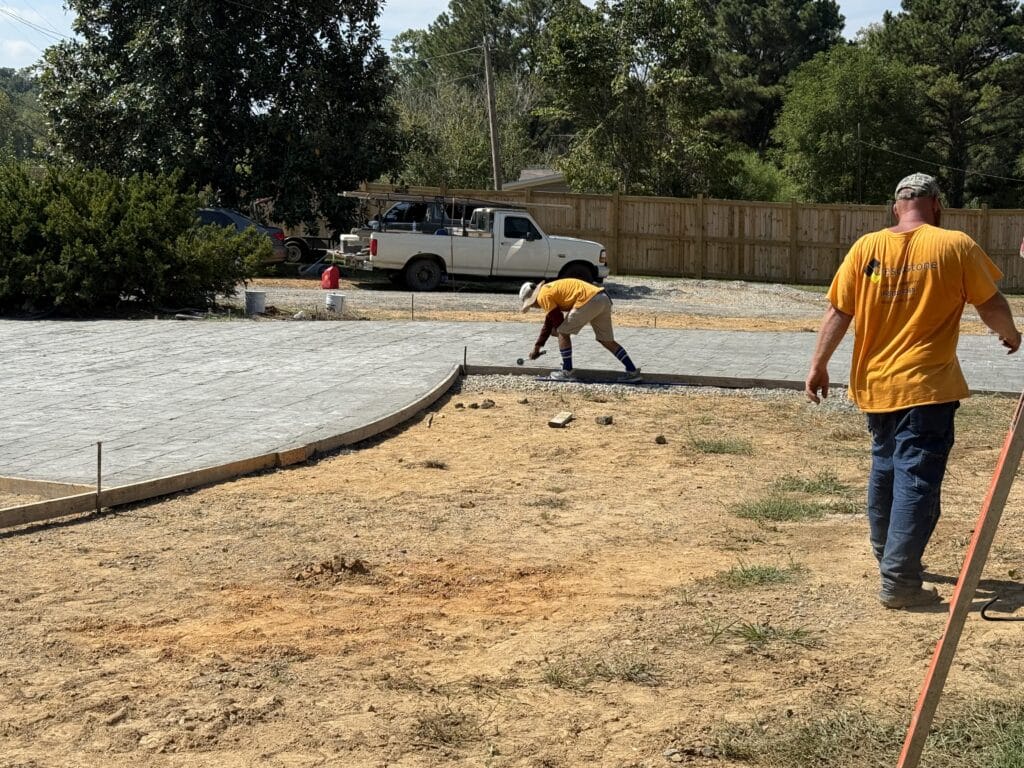
Summer is often the most difficult season for pouring concrete in East Tennessee.
Hot-weather concreting involves much more than high air temperature.
The American Concrete Institute identifies high ambient temperature, high concrete temperature, low relative humidity and high wind speed as important hot-weather conditions that can affect fresh or hardened concrete.
Concrete temperature, relative humidity, wind and direct sunlight can combine to increase evaporation from freshly placed concrete. Hot conditions can also accelerate setting, which reduces the amount of time available for placing and finishing.
If the surface loses moisture too rapidly, the risk of plastic shrinkage cracking and other surface problems increases.
And East Tennessee summer conditions can change quickly.
A crew may be dealing with:
- high air temperatures
- hot concrete
- strong direct sunlight
- rapidly heating subgrades
- changing humidity
- wind
- high evaporation rates
- fast setting
- thunderstorms developing later in the day
That is why an experienced concrete contractor may change the schedule rather than simply pour because the customer is ready.
Sometimes the correct decision is to wait.
Why We Sometimes Reschedule Concrete During Extreme Summer Heat
There are days when the best thing we can do for a customer’s project is not pour it that day.
That’s not lost production time. That’s quality control.
If environmental conditions aren’t appropriate for a particular placement, we may move the project to another day or change the time of the pour.
During hot periods, that can mean pouring:
- early in the morning
- later in the day when appropriate
- during a cooler weather window
- or, on certain commercial projects, at night
Commercial work sometimes gives us additional scheduling flexibility because nighttime placement can reduce heat and solar exposure while also minimizing disruption to businesses, pedestrians or traffic.
The objective isn’t to finish the job as quickly as possible.
The objective is to install concrete that performs properly long after our trucks and equipment leave the property.
Extreme Heat Affects Our Crews, Too
Concrete isn’t the only consideration during extreme East Tennessee summer heat. Our crew’s safety matters too.
Concrete work is physically demanding. Our crews may be excavating, grading, setting forms, moving materials, placing concrete and finishing slabs while exposed to direct sunlight and heat for hours at a time.
On extremely hot summer days, there are times when we send our crews home rather than expose them to unsafe working conditions.
That decision also protects the quality of our work.
Concrete installation and finishing require concentration, timing and physical endurance. Our crews perform their best work under reasonable working conditions, and we aren’t willing to compromise employee safety or the quality of a customer’s project simply to keep a date on the schedule.
During periods of extreme heat, we may adjust the workday, schedule a pour earlier in the morning, select a cooler weather window or postpone the project entirely.
For certain commercial projects, nighttime placement may also be an option when project conditions allow.
Sometimes rescheduling a concrete pour is a sign of an experienced contractor — not an unreliable one.
We’re interested in how that concrete will perform years from now, not simply whether we can get it poured today.
Concrete Mixes Can Be Adjusted for Weather Conditions
The concrete mixture itself is another part of weather planning.
We coordinate with our ready-mix concrete suppliers when conditions require adjustments to the mixture or delivery plan.
Concrete is not a one-size-fits-all material.
Depending on the project and environmental conditions, mix design, admixtures, concrete temperature, transportation time, placement timing and curing procedures may need to be considered.
Hot-weather placement and cold-weather placement create different challenges, which is why experienced concrete contractors plan for the conditions instead of treating every pour exactly the same.
Humidity Matters More Than Most People Realize
Humidity is an important part of concrete curing, but it has to be considered together with temperature and wind.
People often assume that a hot day is automatically worse than a cooler day. That’s not always the whole story.
Evaporation from fresh concrete is influenced by several interacting conditions, including:
- air temperature
- concrete temperature
- relative humidity
- wind speed
This means two days with exactly the same air temperature can affect fresh concrete very differently.
A windy day with conditions favoring evaporation can create a completely different situation from a calm day at the same temperature.
That’s why simply checking the high temperature on a weather app doesn’t tell you whether conditions are appropriate for pouring concrete.
Wind Can Be a Serious Problem for Fresh Concrete
Wind is one of the most overlooked weather factors in concrete work.
Fresh concrete needs controlled moisture conditions while it begins curing. Strong wind moving across the surface can accelerate evaporation.
If moisture disappears from the exposed surface faster than it can be replaced, plastic shrinkage cracking can develop before the concrete has fully hardened.
This is one reason experienced contractors consider wind, temperature and humidity together.
A relatively mild day can still require precautions if it is sunny, dry and windy.
What About Rain?
Rain matters, but “chance of rain” does not automatically mean concrete cannot be poured.
The timing and intensity of the rain matter.
A hard downpour striking freshly finished concrete can damage the surface. Rain can also create serious problems if excess water becomes incorporated into the surface while concrete is being finished.
On the other hand, a brief light rain at a different stage of the project isn’t necessarily catastrophic, and concrete can sometimes be protected when weather changes unexpectedly.
Professional crews monitor the forecast and make decisions based on the particular project, placement timing and expected weather.
We would rather reschedule a pour than gamble with a customer’s concrete when severe weather threatens the quality of the finished work.
Direct Sunlight and Surface Temperature Matter Too
Air temperature isn’t the only temperature that matters.
Direct sunlight can heat forms, reinforcement, equipment and the surface on which concrete will be placed. It can also increase the temperature of freshly placed concrete and contribute to surface evaporation.
This becomes especially important on large exposed slabs, driveways, parking areas, sidewalks and decorative concrete.
Shade, cloud cover and time of day can therefore make a meaningful difference even when the forecasted air temperature hasn’t changed very much.
The Ground Under the Concrete Matters
Weather affects more than the concrete itself.
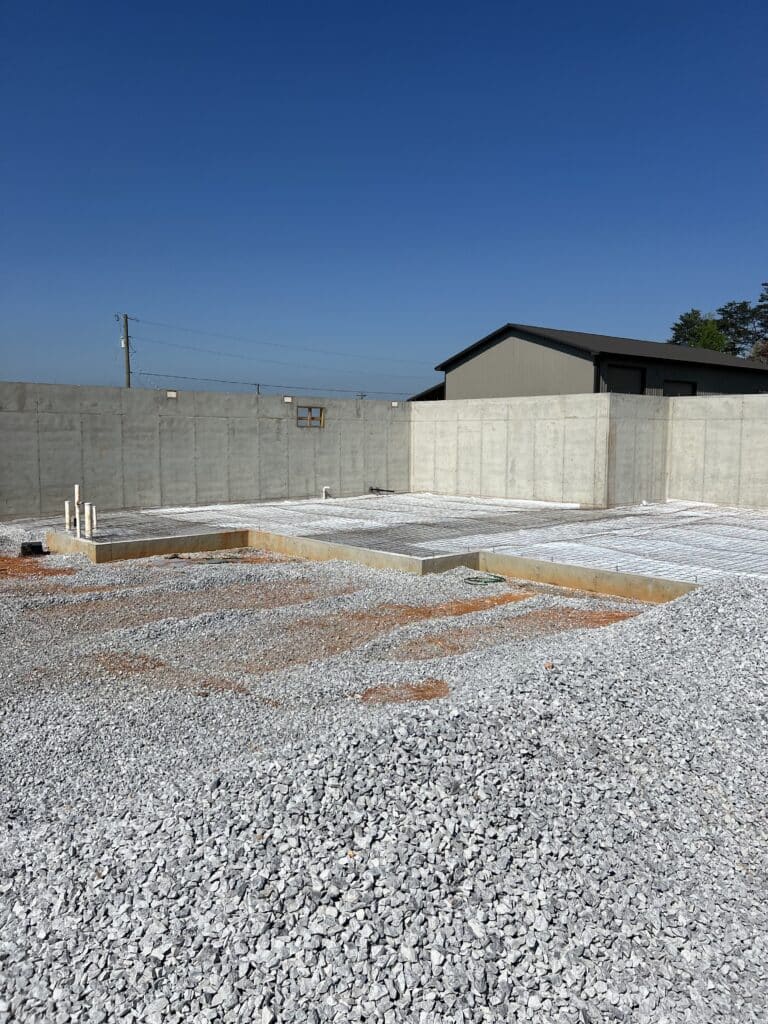
The condition of the subgrade is critical.
Concrete should not simply be poured over frozen, unstable, saturated or improperly prepared ground. East Tennessee’s rainfall, clay soils, hills and drainage patterns make proper site preparation especially important.
Proper drainage is especially important in our region because East Tennessee’s rainfall, clay soils and sloped terrain can create additional challenges for concrete installations.
Before placement, the site may require excavation, grading, stone base preparation, drainage corrections or other work appropriate for the particular project.
A beautiful concrete finish can’t compensate for a poorly prepared foundation underneath it.
Weather After the Pour Matters Too
We aren’t only interested in what the weather is doing while the concrete truck is sitting at your property.
The weather after the pour matters too.
Concrete continues developing strength after finishing is complete, so the forecast during the early curing period is part of our planning.
Depending on the season, we may be watching for:
- freezing temperatures
- extreme heat
- rapid temperature changes
- strong wind
- heavy rainfall
- direct sun exposure
- conditions that increase moisture loss
A sunny forecast at 8:00 a.m. doesn’t tell the whole story.
Concrete installation requires looking ahead.
Decorative Concrete Requires Even More Weather Planning
Weather becomes particularly important with decorative concrete.
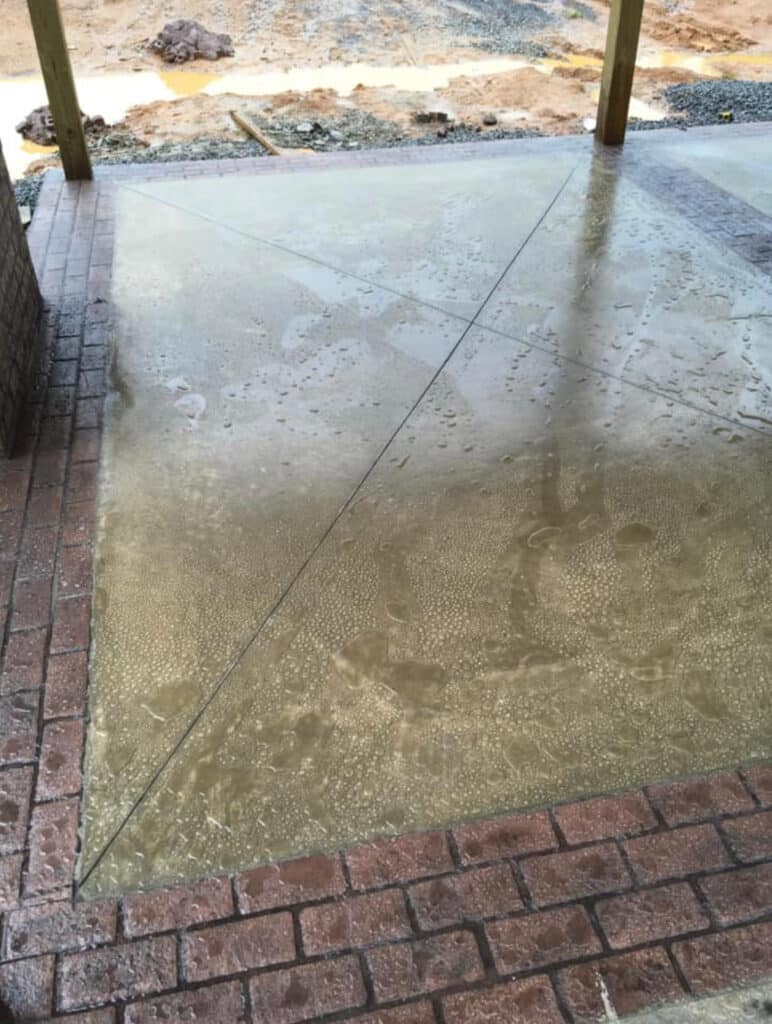
Stamped concrete, colored concrete and sealed decorative surfaces involve additional timing considerations.
These considerations are especially important for stamped, colored and other decorative concrete finishes.
Stamping has to occur during the correct stage of setting. If concrete begins setting too quickly because of heat, the available working window can shrink considerably.
Sealers also have manufacturer-specified application conditions. Applying certain concrete sealers to an excessively hot surface can cause problems such as bubbling, improper film formation or an uneven appearance.
That’s one reason decorative concrete should never be rushed simply to stay on a schedule.
Why Experience With East Tennessee Weather Matters
Concrete guidelines are important, but local experience matters too.
Crescostone has been completing residential, commercial and specialty concrete projects throughout East Tennessee since 2002.
Over those years, we’ve worked through Tennessee heat, humidity, cold snaps, sudden thunderstorms, freeze/thaw cycles, windy days and the rapidly changing weather our region is known for.
We’ve learned when conditions are favorable, when additional precautions are necessary and — equally important — when a project needs to be postponed.
Sometimes professional concrete work means knowing how to pour.
Sometimes it means knowing when not to pour.
So, What Month Is Best for Pouring Concrete in East Tennessee?
There isn’t one magic month.
If you’re planning concrete work in Knoxville or elsewhere in East Tennessee, don’t assume you have to wait until summer.
Spring and fall usually provide some of our favorite conditions. Winter can also offer excellent opportunities during periods of suitable temperatures. Summer is certainly possible, but hot-weather concrete requires careful planning and sometimes changes to scheduling, mixture considerations and curing procedures.
The best time isn’t determined by a date on the calendar.
It’s determined by the combination of:
- air temperature
- concrete temperature
- humidity
- wind
- solar exposure
- precipitation
- ground conditions
- the type and size of the project
- the concrete mixture
- and the weather expected during early curing
That’s the answer more than two decades of pouring concrete in East Tennessee has taught us.
Frequently Asked Questions About Pouring Concrete in East Tennessee
What is the best time of year to pour concrete in East Tennessee?
Spring and fall generally offer some of the most favorable conditions because temperatures are moderate. Mild winter periods can also provide excellent pouring conditions when freezing temperatures are avoided or proper cold-weather protection is used. Summer concrete placement is common but may require additional precautions because heat, sunlight and evaporation can accelerate setting and moisture loss.
Can concrete be poured in Tennessee during winter?
Yes. Concrete can be successfully installed during winter when appropriate cold-weather procedures are followed. The primary concerns are concrete temperature, frozen ground and protecting young concrete from freezing while it develops adequate strength.
Is summer the best time to pour a concrete driveway?
Not necessarily. Summer is popular for construction, but extreme heat can make concrete placement and curing more challenging. Experienced contractors may schedule hot-weather pours earlier in the day or choose a cooler weather window.
Is it too hot to pour concrete?
There isn’t one universal outdoor air temperature at which every concrete project becomes impossible. Air temperature is only one factor. Concrete temperature, humidity, wind, sunlight, evaporation rate, mix design and the type of placement all matter. When conditions could compromise the work, the appropriate decision may be to use hot-weather procedures, change the placement time or reschedule.
Can you pour concrete if rain is in the forecast?
Sometimes. The timing, duration and intensity of expected rainfall matter. Heavy rain during placement or finishing can damage fresh concrete, so contractors should monitor conditions and postpone a project when the risk is unacceptable.
Can wind affect concrete while it cures?
Yes. Wind can increase moisture evaporation from fresh concrete. Combined with temperature and humidity conditions, excessive evaporation can increase the risk of plastic shrinkage cracking.
Why would a concrete contractor postpone a sunny day?
Because sunny doesn’t necessarily mean good concrete weather. Extreme heat, hot concrete, direct solar radiation, low humidity or high wind can create unfavorable placement and curing conditions even when there isn’t a cloud in the sky.
Planning a Concrete Project in Knoxville or East Tennessee?
Don’t choose your project date based solely on the season.
Crescostone has served East Tennessee since 2002, providing residential and commercial concrete installation throughout Knoxville, Jefferson City, Morristown, Sevierville, Dandridge and surrounding communities.
We evaluate the project, site conditions and weather and coordinate the placement accordingly.
Whether you’re planning a driveway, patio, sidewalk, commercial slab, decorative concrete project, drainage work or another concrete installation, we’ll help determine an appropriate time to complete the work.
You can also view examples of our residential, commercial and decorative concrete projects completed throughout East Tennessee.
Planning concrete work in East Tennessee? Contact Crescostone for a free estimate and let an experienced local concrete contractor determine the right conditions for your project.
We proudly serve:
• Knoxville
• Newport
• Jefferson City
• Sevierville
• Morristown
• And all surrounding East Tennessee areas
Contact Crescostone! Give us a call at (865)322-0365
Are you out of the mud yet?
