

Table of Contents
What’s Worse Than Concrete Cracking?
When most people think about concrete problems, they immediately think about cracks.
That’s understandable. Cracks are visible, easy to spot, and often receive the most attention online. However, after nearly 30 years in the concrete industry, we’ve learned that cracks are not always the most serious issue.
In many cases, poor concrete drainage can create far bigger problems than a crack.
In fact, concrete is notorious for cracking and hairline cracks are expected. We can almost guarantee that most concrete will develop some degree of cracking during its lifetime. Hairline shrinkage cracks are a normal part of the curing process and have little impact on the overall performance of the concrete.
What concerns us much more is whether the concrete is handling water properly.
Why Concrete Drainage Matters
The primary purpose of concrete is simple.
Concrete is supposed to get you out of the mud and out of the water. Which is why our slogan is “Are you out of the mud yet?”
A driveway should provide a stable surface where you can park and exit your vehicle without stepping into a puddle. A sidewalk should remain safe during wet weather. A patio should shed water properly after a rainstorm. A slab should help manage moisture rather than contribute to moisture problems.
When concrete drainage is poor, water begins collecting where it shouldn’t.
That’s when larger problems often begin.
Common Concrete Drainage Problems
Some of the most common concrete drainage problems we encounter throughout East Tennessee include:
Standing water on driveways
Low spots that collect water after rainfall
Patios that drain toward homes
Sidewalks with puddling issues
Water flowing toward garage doors
Drainage that directs water toward foundations
Soil erosion around concrete surfaces
Many of these issues are caused by improper slope, poor site preparation, inadequate grading, or a lack of planning before the concrete was poured.
A concrete surface may look beautiful on the day it is installed, but if the drainage is incorrect, problems can develop for years afterward.
Why Standing Water Is Worse Than Many Cracks
A small crack may never cause a significant problem.
Standing water is different.
Poor concrete drainage can contribute to:
Basement moisture issues
Foundation problems
Slip and fall hazards
Freeze-thaw damage
Surface deterioration
Soil erosion
Water intrusion into structures
Mosquito breeding areas
We’ve seen concrete slabs with no cracks that still performed poorly because they trapped water and directed it where it didn’t belong.
We’ve also seen concrete with minor cracking continue performing well for decades because the drainage was designed correctly.
Performance matters more than appearance.
The Importance of Proper Concrete Slope
One of the most important parts of concrete drainage is establishing the proper slope.
Concrete should generally be designed to move water away from structures and toward appropriate drainage areas.
Unfortunately, some contractors focus only on the finished appearance of the concrete while overlooking how the surface will handle water after installation.
A perfectly smooth slab that holds water is not performing its job properly.
A concrete surface should not create puddles, direct water toward your home, or leave standing water long after a rain event.
What Causes Concrete Drainage Problems?
Many concrete drainage problems begin before the concrete is ever poured.
Proper preparation may include:
Evaluating existing drainage conditions
Establishing correct elevations
Compacting the subgrade
Installing proper base materials
Planning water runoff paths
Addressing soft or unstable soil conditions
Cutting corners during preparation can lead to long-term drainage issues that become expensive to correct later.
This is one reason experienced contractors spend so much time on preparation before placing concrete.
What We Look For During a Concrete Evaluation
When evaluating concrete, we don’t immediately focus on small cosmetic cracks.
Instead, we look at:
Water movement
Drainage patterns
Standing water
Surface slope
Soil conditions
Signs of settlement
Areas where water collects
These factors often tell us more about the quality and performance of a project than a few hairline cracks.
Final Thoughts On Concrete Drainage and What’s Worse Than Cracks in Concrete
Concrete is supposed to perform. The fundamental purpose of concrete is to keep structures dry with adequate water shed and to keep us out of the mud!
After nearly 30 years serving East Tennessee, we’ve found that proper concrete drainage is often more important than minor cracking.
For property owners who are particularly concerned about the appearance of minor cracks, decorative concrete finishes can often help make cracking less noticeable while still providing the durability and performance expected from a quality concrete installation.
A concrete surface that sheds water properly, protects nearby structures, and continues performing its intended function will generally provide more value than a perfectly smooth slab that traps water and creates drainage problems.
When evaluating concrete, don’t just look for cracks.
Look for where the water goes.
Is concrete cracking normal?
Yes. Concrete is notorious for cracking, and minor hairline cracks are often a normal part of the curing process. While some cracks may indicate settlement or other concerns, many are cosmetic and do not significantly affect the performance of the concrete.
What causes standing water on concrete?
Standing water is often caused by poor concrete drainage, improper slope, low spots in the surface, inadequate site preparation, or settlement over time. When water cannot drain properly, it will collect in the lowest areas.
Are concrete drainage problems worse than cracks?
In many situations, yes. Minor cracks may have little impact on a concrete surface, while poor concrete drainage can lead to standing water, slip hazards, erosion, moisture intrusion, and other costly problems.
Why does water pool on my driveway or patio?
Water pooling on concrete is usually the result of low spots, improper grading, settlement, or drainage issues that prevent water from flowing away as intended. A professional evaluation can help identify the cause.
Can poor concrete drainage damage my home?
It can. Improper concrete drainage may direct water toward foundations, basements, garages, and other structures. Over time, excess moisture can contribute to property damage and other moisture-related issues.
How can I tell if my concrete has drainage problems?
Common warning signs include standing water after rainfall, puddles that remain long after surrounding areas have dried, water flowing toward structures, soil erosion, and areas where moisture consistently accumulates.
What is more important than a perfectly smooth concrete surface?
Proper performance. A concrete surface should manage water effectively, provide a stable surface, and perform its intended function. A slab that sheds water properly is often more valuable than one that simply looks perfect on the day it is installed.
What should homeowners look for when evaluating concrete?
Instead of focusing only on cracks, homeowners should also pay attention to drainage patterns, water movement, standing water, surface slope, erosion, and how the concrete performs during and after rainfall.
Do you need concrete repair due to concrete drainage problems at your home or business?
We proudly serve:
• Knoxville
• Newport
• Jefferson City
• Sevierville
• Morristown
• And all surrounding East Tennessee areas
Contact Crescostone! Give us a call at (865)322-0365
“Are you out of the mud yet?”
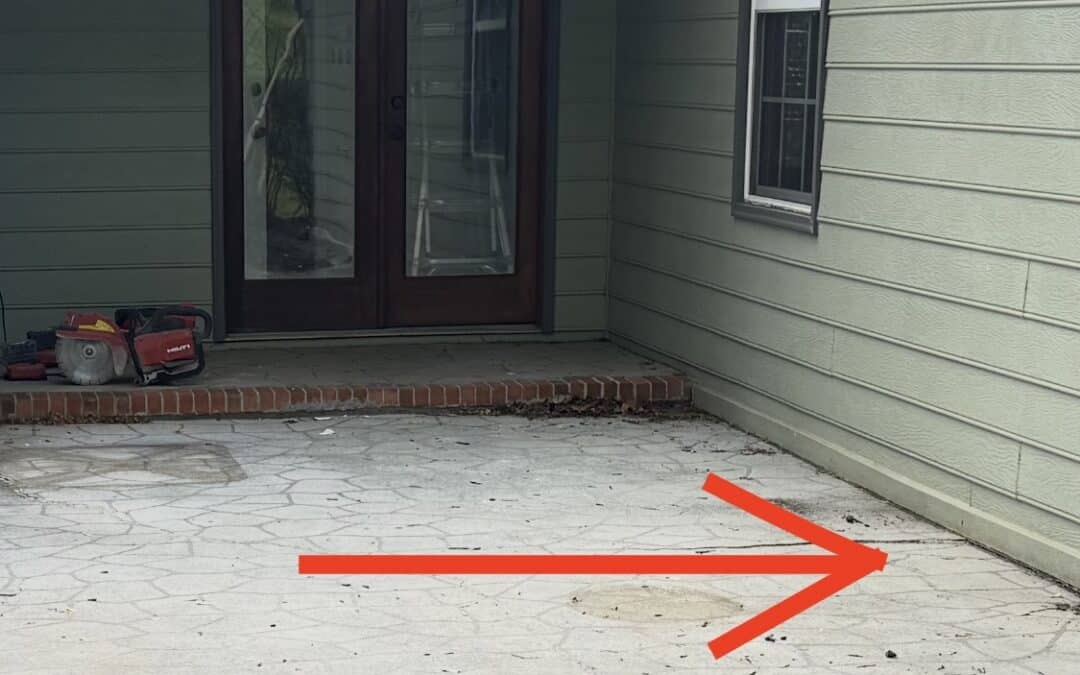
Real Example of Concrete Drainage Problem
Below are before and after pictures of a patio with concrete drainage issues leading to water intrusion which we repaired.


